

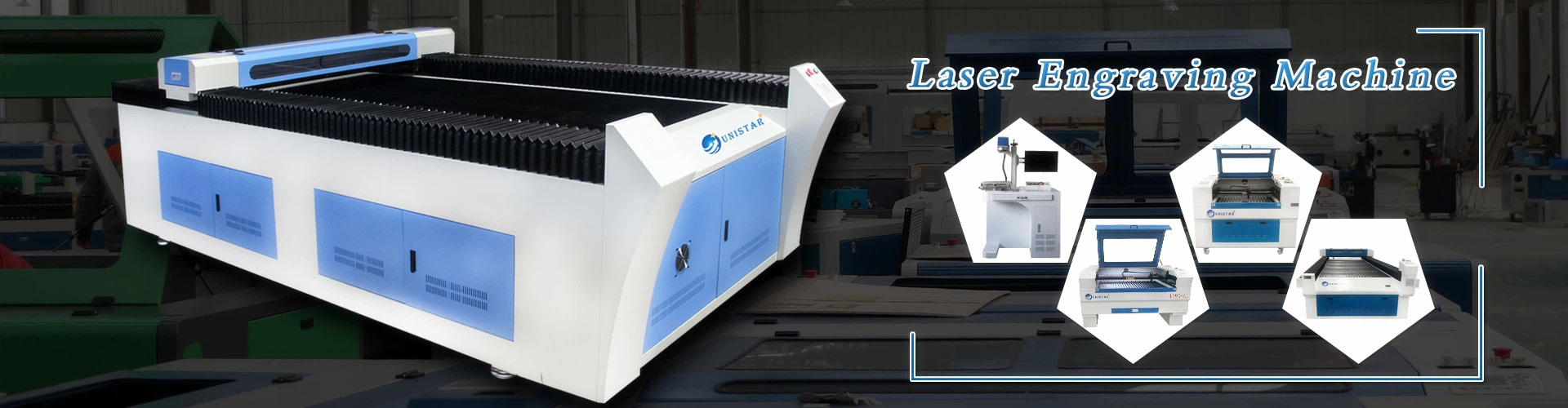
Laser Cutting Machine
Laser Cutting Machine is divided two type , CO2 laser cutting engraving machine ,Used for plastic material cutting , power have 80W/100W/130W/150W.
Fiber laser cutting machine is only used for cutting metal , like carbon steel , Stainless steel ,aluminium, brass , Gold, silver etc, power500W/750W/1000W/1200W/2000W/3000W.
What is Laser Cutting Machine
Laser cutting machine emits a high powered laser beam to either cleanly cut or etch a specific design on materials such as steel, plastic or wood. It is generally used more for industrial manufacturing applications and the beam will either burn, vaporise or melt away the excess product, leaving a superior finished design or edge.A laser cutting machine has settings known as the computer numerical control (CNC), as well as laser optics, which control and direct the laser beam’s intensity for the desired design effect, or the specific cuts required in a manufacturing or design project. The laser beam is generated by a process whereby electrical discharges or a lamp trigger a lasing material within a confined container causing a chemical reaction, resulting in a high powered beam being released. The beam is then reflected using a mirror in a stream of monochromatic light. From the mirror, the light is then directed by fibre optics or mirrors to the work area, with the narrowest point of the beam cutting or making the design etch on the material.
Advantages of Laser Cutting Machine
High precision
The narrowness of the energy beam and the precision with which the material and/or the laser optics can be moved ensures extremely high cutting quality. Laser cutting allows the execution of intricate designs that can be cut at high feed rates, even in difficult or fragile material substrates.
High speed
Few production methods can come close in processing speed to laser cutting. The ability to cut a 40 mm steel sheet using a 12 kW oxygen-assisted laser provides speeds some 10x faster than a bandsaw and 50–100 times faster than wire cutting.
Unlimited 2D complexity
Laser cutting allows intricacy through the nature of the G-code movement control method of positioning and the small size of the applied energy hot spot. Features that are only weakly attached to the main body are cut without any application of force, so the process is essentially limited by material properties, rather than process capabilities.
Variety of materials
Laser cutting is a flexible technology that can be adapted to cut widely different materials efficiently, including: acrylic and other polymers, stainless steel, mild steel, titanium, hastelloy, and tungsten. This versatility is increasing as technology develops. For example, dual frequency lasers can be applied to cut carbon fiber reinforced composites one frequency for the fiber, one for the bonding agent.
-
![3D Tube Laser Bevel Cutting Machine With Automatic Feeder]() 3D Tube Laser Bevel Cutting Machine With Automatic Feeder3D Tube Laser Bevel Cutting Machine with Automatic Feeder Looking for a professional metal cutting tool to create precise bevels of 15, 30 or 45 degrees on metal tubes or profiles for welding,...read more
3D Tube Laser Bevel Cutting Machine With Automatic Feeder3D Tube Laser Bevel Cutting Machine with Automatic Feeder Looking for a professional metal cutting tool to create precise bevels of 15, 30 or 45 degrees on metal tubes or profiles for welding,...read more -
![CNC Metal Pipe Laser Cutter With Automatic Feeding System]() CNC Metal Pipe Laser Cutter With Automatic Feeding SystemCNC Metal Pipe Laser Cutter with Automatic Feeding System A CNC metal pipe laser cutting machine is an automatic fiber laser tube cutter that uses computer-controlled toolpaths and a rotating...read more
CNC Metal Pipe Laser Cutter With Automatic Feeding SystemCNC Metal Pipe Laser Cutter with Automatic Feeding System A CNC metal pipe laser cutting machine is an automatic fiber laser tube cutter that uses computer-controlled toolpaths and a rotating...read more -
![5x10 Fiber Laser Cutter With Fully Enclosed Cover For Metal]() 5x10 Fiber Laser Cutter With Fully Enclosed Cover For MetalFiber laser cutting machine comes with dual 5x10 automatic exchange working tables for full-size sheet metal cuts (a rotary attachment is optional for metal tubing), and a fully enclosed cover for...read more
5x10 Fiber Laser Cutter With Fully Enclosed Cover For MetalFiber laser cutting machine comes with dual 5x10 automatic exchange working tables for full-size sheet metal cuts (a rotary attachment is optional for metal tubing), and a fully enclosed cover for...read more -
![High Power Fiber Laser Metal Cutter For Sale]() High Power Fiber Laser Metal Cutter For SaleHigh-power fiber laser cutter is an automatic CNC laser metal cutting machine . All things are done with one machine, saving space and cost, making it professional for commercial use and...read more
High Power Fiber Laser Metal Cutter For SaleHigh-power fiber laser cutter is an automatic CNC laser metal cutting machine . All things are done with one machine, saving space and cost, making it professional for commercial use and...read more -
![Fiber Laser Cutter With Exchange Table]() Fiber Laser Cutter With Exchange TableFiber laser cutting machine comes with dual 5x10 automatic exchange working tables for full-size sheet metal cuts (a rotary attachment is optional for metal tubing), which makes it professional...read more
Fiber Laser Cutter With Exchange TableFiber laser cutting machine comes with dual 5x10 automatic exchange working tables for full-size sheet metal cuts (a rotary attachment is optional for metal tubing), which makes it professional...read more -
![2025 Best Acrylic Laser Cutting Machine For Sale]() 2025 Best Acrylic Laser Cutting Machine For SaleDo you have DIY acrylic laser cutter kit plans or need to buy an affordable acrylic laser cutting machine? Review the 2025 new laser acrylic cutter buyer's guide as follows, we'll offer you 2025...read more
2025 Best Acrylic Laser Cutting Machine For SaleDo you have DIY acrylic laser cutter kit plans or need to buy an affordable acrylic laser cutting machine? Review the 2025 new laser acrylic cutter buyer's guide as follows, we'll offer you 2025...read more -
![Luggage Type Pulse Laser Cleaning Machine]() Luggage Type Pulse Laser Cleaning MachineLaser cleaning equipment is a new generation of high-tech products for surface cleaning. Easy to install, operate and automate. Simple operation, turn on the electricity, and open the equipment...read more
Luggage Type Pulse Laser Cleaning MachineLaser cleaning equipment is a new generation of high-tech products for surface cleaning. Easy to install, operate and automate. Simple operation, turn on the electricity, and open the equipment...read more -
![Metal Tube And Plate Laser Cutting Machine]() Metal Tube And Plate Laser Cutting MachineThe plate and tube integrated machine has a stable and efficient performance in cutting pipes and plates, fully realizes the multi-purpose of the machine, meets the needs of customers for both...read more
Metal Tube And Plate Laser Cutting MachineThe plate and tube integrated machine has a stable and efficient performance in cutting pipes and plates, fully realizes the multi-purpose of the machine, meets the needs of customers for both...read more -
![Metal Pipe And Panel Laser Cutting Machine]() Metal Pipe And Panel Laser Cutting MachineLaser cutting is developing rapidly and plays an important role in electronics, textile machinery, auto parts, aerospace and other industries.read more
Metal Pipe And Panel Laser Cutting MachineLaser cutting is developing rapidly and plays an important role in electronics, textile machinery, auto parts, aerospace and other industries.read more
Fiber laser cutting machine can cut plate and... -
![USF6040 Small Fiber Laser Cutting Machine]() USF6040 Small Fiber Laser Cutting MachineUSF6040 fiber laser cutting machine is special for high precision machinery parts and microelectronics industry. Faster speed and higher precision professional for cutting thin metal sheet like...read more
USF6040 Small Fiber Laser Cutting MachineUSF6040 fiber laser cutting machine is special for high precision machinery parts and microelectronics industry. Faster speed and higher precision professional for cutting thin metal sheet like...read more -
![750W Metal Cutting Fiber Laser Cutting Machine]() 750W Metal Cutting Fiber Laser Cutting Machine750W Metal Cutting Fiber Laser Cutting Machine is applicable for high-speed cutting on different metal plates, Like Stainless Steel, Carbon steel, Aluminum plate, brass, alloy plate, rare metals...read more
750W Metal Cutting Fiber Laser Cutting Machine750W Metal Cutting Fiber Laser Cutting Machine is applicable for high-speed cutting on different metal plates, Like Stainless Steel, Carbon steel, Aluminum plate, brass, alloy plate, rare metals...read more -
![1325 Laser Machine]() 1325 Laser Machine1325 Laser machine Features: 1.The lifetime of RECI laser tube is about 10 mothes.Resistance to consume. 2. High quality Singapore lens and mirrors 3.Stepper motor and drive have highly cost...read more
1325 Laser Machine1325 Laser machine Features: 1.The lifetime of RECI laser tube is about 10 mothes.Resistance to consume. 2. High quality Singapore lens and mirrors 3.Stepper motor and drive have highly cost...read more


Why Choose Us
Rich Experience
UNISTRCNC boasts professional technical and research teams with extensive experience in CNC routers, ATC CNC routers, laser machines, laser cutting machines, laser marking machines, CNC metal engraving machines, CNC plasma cutting machines, and fiber metal cutting machines.
Professional Team
Shandong Unistar Machinery Co.,Ltd specializes in manufacturing and exporting CNC machines and laser machines since 2002. The company operates two large factories, one dedicated to CNC routers and the other to laser machines.
Certificate of Qualification
All our products have obtained CE, FDA, and SASO certificates, ensuring quality assurance.
Problem Solving
Our technical engineers solve customer problems promptly, ensuring customer satisfaction and worry-free machine usage.
How Does Laser Cutting Work
Laser cutting machine uses a high-power laser which is directed through optics and computer numerical control (CNC) to direct the beam or material. Typically, the process uses a motion control system to follow a CNC or G-code of the pattern that is to be cut onto the material. The focused laser beam burns, melts, vaporises or is blown away by a jet of gas to leave a high-quality surface finished edge.
The laser beam is created by the stimulation of lasing materials through electrical discharges or lamps inside a closed container. The lasing material is amplified by being reflected internally via a partial mirror until its energy is enough for it to escape as a stream of coherent monochromatic light. This light is focused at the work area by mirrors or fibre optics that direct the beam through a lens which intensifies it.
At its narrowest point, a laser beam is typically under 0.0125 inches (0.32 mm) in diameter, but kerf widths as small as 0.004 inches (0.10mm) are possible depending on material thickness.
Where the laser cutting process needs to start anywhere other than the edge of the material, a piercing process is used, whereby a high power pulsed laser makes a hole in the material, for example taking 5-15 seconds to burn through a 0.5-inch-thick (13 mm) stainless steel sheet.
Laser Cutting Machine Cutting Types


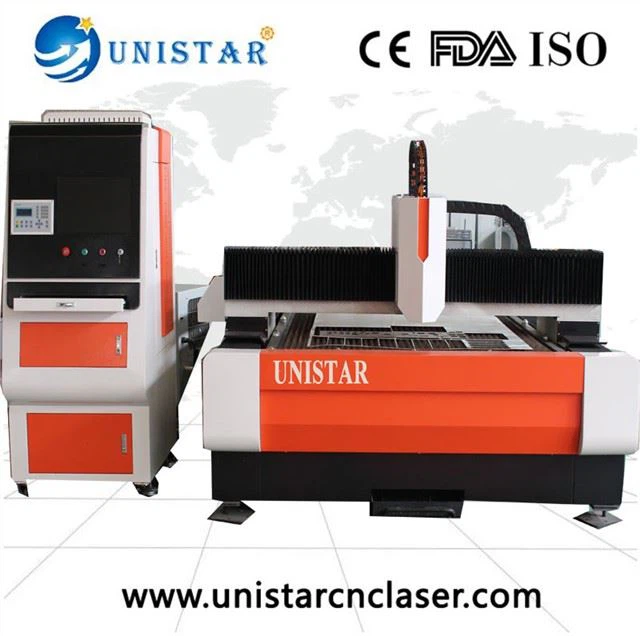
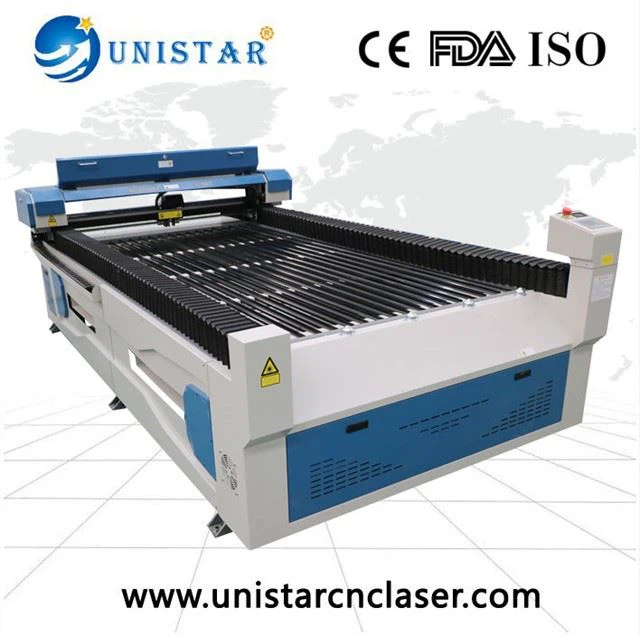
This process can be broken down into three main techniques - CO2 laser (for cutting, boring, and engraving), and neodymium (Nd) and neodymium yttrium-aluminium-garnet (Nd:YAG), which are identical in style, with Nd being used for high energy, low repetition boring and Nd:YAG used for very high-power boring and engraving.
All types of lasers can be used for welding.
CO2 lasers involve the passing of a current through a gas mix (DC-excited) or, more popularly these days, using the newer technique of radio frequency energy (RF-excited). The RF method has external electrodes and thereby avoids problems related to electrode erosion and plating of the electrode material on glassware and optics that can occur with DC, which uses an electrode inside the cavity.
Another factor that can affect laser performance is the type of gas flow. Common variants of CO2 laser include fast axial flow, slow axial flow, transverse flow, and slab. Fast axial flow uses a mixture of carbon dioxide, helium and nitrogen circulated at a high velocity by a turbine or blower. Transverse flow lasers use a simple blower to circulate the gas mix at a lower velocity, while slab or diffusion resonators use a static gas field which requires no pressurisation or glassware.
Different techniques are also used to cool the laser generator and external optics, depending on the system size and configuration. Waste heat can be transferred directly to the air, but a coolant is commonly used. Water is a frequently used coolant, often circulated through a heat transfer or chiller system.
One example of water cooled laser processing is a laser microjet system, which couples a pulsed laser beam with a low-pressure water jet to guide the beam in the same manner as an optical fibre. The water also offers the advantage of removing debris and cooling the material, while other advantages over ‘dry’ laser cutting include high dicing speeds, parallel kerf, and omnidirectional cutting.
Fibre lasers are also gaining popularity in the metal cutting industry. This technology uses a solid gain medium rather than a liquid or gas. The laser is amplified in a glass fibre to produce a far smaller spot size than that achieved with CO2 techniques, making it ideal for cutting reflective metals.
8 Uses of Laser Cutting Machine and Their Importance
The automotive industry has embraced the advantages offered by laser cutting to produce a range of components. Tolerances in the automotive industry are extremely tight, and laser cutting is a good way to meet these. Laser-cutting’s flexibility and capability to create complex shapes and designs make it a popular technology to produce car parts. In the past, car parts were created with stamping and die-cutting methods. However, these methods are not as accurate nor can they create complex shapes and designs like laser cutting. The type of laser cutter that is used in the automotive industry is a sheet metal laser cutter. Materials that are laser cut in the automotive industry include, but are not limited to, car parts, components, die-castings, forgings, and stampings.
The medical device industry utilizes laser cutting to produce a variety of products including pacemakers, stents, and catheters. The laser beam melts, vaporizes, or burns away the material, leaving a clean, precise cut. Laser cutting is often used to create products with intricate designs, such as those intended for use within the human body. The type of laser cutting used will depend on the material being cut and the desired final product. For example, some medical devices are made from stainless steel, which can be cut with a CO2 laser. Other materials, such as plastics, can be cut with a fiber laser.
The jewelry industry is one of the most ancient industries in the world, with a long and rich history. In recent years, however, it has undergone a major transformation, thanks to the advent of laser-cutting technology. While traditional methods of jewelry making relied on manual labor and simple tools, laser cutting has allowed for a much more precise and intricate level of design. As a result, jewelry made with laser cutting is often more intricate than its traditional counterpart. Laser cutting in the jewelry industry is typically used to create detailed patterns and designs in metal, as well as to cut gemstones. It can also be used to engrave text or images onto jewelry pieces. Jewelry products that are commonly made with laser cutting include rings, pendants, earrings, and bracelets. The use of laser cutting in the jewelry industry has revolutionized the way that jewelry is made, and has allowed for a whole new level of creativity and design.
Ceramic manufacturing is the process of shaping and firing ceramic materials to create products. Ceramics can be made from clay, glass, metal, or synthetic materials. Laser cutting can be used in the ceramic manufacturing process to create precise shapes and designs in the material. This type of cutting is often used to create intricate patterns and decorative elements in products. Common examples of products made with laser cutting include tiles, pottery, and sculptures. The type of laser cutting employed in the ceramic industry is typically CO2 laser cutting, which uses a high-powered laser to cut through the material. This type of laser cutting is precise and can create very complex designs. CO2 laser cutting is also relatively fast, making it ideal for use in the ceramic manufacturing process.
When it comes to the silicon industry, laser cutting is a vital process. Silicon manufacturing refers to the production of silicon wafers—thin discs of semiconductor material that are used in the fabrication of various electronic devices. The type of laser cutting used in this industry is known as CO2 laser cutting. It is used to create the small-scale features found on silicon wafers. There are a variety of different products that are produced in the silicon industry, including integrated circuits, solar cells, and semiconductor chips. CO2 laser cutting is used to create intricate patterns on these products, which are then used in a variety of electronic devices.
Packaging refers to the process of enclosing products or items for protection and handling. Laser cutting is utilized in the packaging industry to create various packaging products, such as boxes, containers, and lids. The two main types of laser-cutting technology are used in this industry: fiber lasers and CO2 lasers. CO2 lasers are typically utilized to cut cardboard, paper, and thin plastics. Fiber lasers, on the other hand, are newer, more expensive, and typically used to cut thicker and harder packaging materials.
Metalworking is the process of shaping and forming metal into desired shapes using various tools. Laser cutting is often employed in the metalworking industry to cut metal into desired shapes. Some common products that are produced are: beams, columns, pipes, tubing, and sheet metal. These products can be used in a variety of industries, such as construction, automotive, and aerospace.
The woodworking industry is a sector of the manufacturing industry that produces wood products. These products can be used for construction, furniture making, or other purposes. Laser-cutting technology is often utilized in this industry to create precise and intricate designs in wood. Some commonly produced items are: furniture, cabinets, and decorative items. The type of laser cutting used in the woodworking industry is typically a CO2 laser. This type of laser uses a beam of infrared light to cut through wood. The CO2 laser can create very complicated designs due to the high level of precision that it offers.
Laser cutters work on the concepts of optics like reflection and amplification. The whole working of a laser cutting machine can be broken into two individual systems- the optical system and the mechanical system.
The optical system generates a high-powered laser beam for the cutting process. The mechanical system moves the laser beam around to create the desired shape. Parts of a basic laser cutting system are:
● Power Supply: The power source helps generate the light beam.
● Laser Resonator: A laser resonator is an assembly of mirrors. It reflects the light beam in the gain medium for amplification.
● Cutting Head: Cutting head focuses the laser beam on the desired point of contact.
● Mechanical System: The mechanical system involves motors and rails. They move the cutting head around the workpiece.
● Motion Control System: The motion control system directs the motors and arms on where to move the laser.
These are only the basic components of a laser cutting system. Modern commercial laser cutters have a lot more parts like cooling stations, dust extractors, and slag discharge systems.
What Materials Can Laser Cutting Machine Cut


Metals
Laser cutters are becoming the preferred cutting tools in most metalworking shops. Metal laser cutting is used in many industries to make incisions on many different forms of metal. Common variants of metals cut with lasers are sheet metal, rods, pipes, and tubes.
Plastics
Plastics are a little tricky to cut with a laser. Unlike sheet metal, some plastics release toxic fumes upon being heated at extreme temperatures. Therefore, knowing what plastics you can cut with laser cutting is important.Some of the plastics that are quite suitable for laser cutting are:Acrylics Delrin Polypropylene Mylar PMMA Polycarbonate POM Polyester Polyethylene.
Wood
Laser cutting is one of the best ways to cut wood. Lasers can work on all types of wood without any exceptions. Laser engraving on wood is almost as common as laser cutting procedures. The only thing to consider is the wood thickness. For woods thicker than 20 mm, waterjets can provide better results.
Fabrics
Laser cutting works great for fabrics and textiles. Conventional cutting methods often fray the fabric edges. However, laser cutting produces no such unwanted effect. The high heat of the laser creates a clean cut and a sealing effect on the fabric’s fibers.
Paper Products
Laser-cut paper is often used for cardboard boxes, packaging products, dioramas, and decorative applications like wedding invitations and bunting. Additionally, the consistency produced by laser-cutting paper is second to none.
Foam
Laser cutters make smooth cuts on foam without any rough edges. However, ensuring that the foam you cut does not release any toxic fumes on heating is important. Some safer foams to cut with a laser are polyurethane, polyethylene, and polyester. Some foams, like Expanded Polystyrene foam, are flammable and don’t release damaging fumes. These require extra caution while cutting with a laser.
Glass
Glass is a very brittle material and uneven force or unbalanced heat can easily crack it. Therefore, laser cutters use fracture-controlled cutting for glass. Etching on glass with a laser is also very common. It is particularly used for decorative items like trophies and panels.
FAQ
We're one of the leading laser cutting machine manufacturers and suppliers in China, featured by quality products and competitive price. Welcome to import laser cutting machine for sale from our factory. for any questions, contact us now.