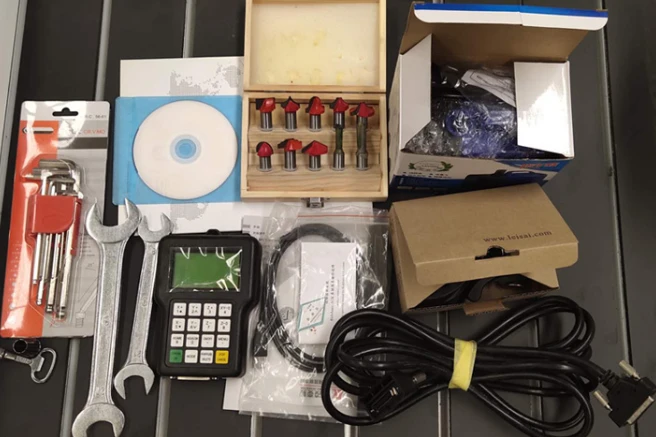
UNISTARCNC will share the following methods for proper installation and use of router bits and tools for beginners and professionals alike.
• Before installing the tool, check the wear of the bit first. If there are defects such as chipping or severe wear, replace the bit with a new one or use it after it is repaired to make accurate cuts.
• The relevant surface must be cleaned and wiped clean before installation, and the gasket and hole burrs must be carefully removed to prevent dirt and burrs from affecting the accuracy of the tool installation position.
• When clamping the tool with a washer, the 2 ends of the washer must be as parallel to each other as possible. If it is found that the bit is skewed after installation, the position of the washer should be adjusted to minimize the cumulative error of the washer. Until the bit does not shake after driving.
• Straight shank milling cutters are usually installed with spring chucks. When installing, tighten the nut to make the spring sleeve shrink radially to clamp the shank of the milling cutter
• Installation of taper shank milling cutter: When the size of the taper shank of the milling cutter is the same as the taper hole at the end of the spindle, it can be directly installed in the taper hole and tightened with a tie rod. Otherwise, use transitional taper sleeves for installation.
• After the tool holder is inserted into the spindle, tighten the bit with the tightening screw. It should be noted that the direction of rotation of the bit must be consistent with the thread direction of the tie rod, so that the thread of the tie rod and the milling cutter can be connected more tightly during rotation, otherwise the milling tool may come out.
• Without affecting the routing, try to make the bit as close to the spindle bearing as possible, and make the hanger bearing as close as possible to the bit. If the bit is far away from the main bearing, a rack bearing should be installed between the spindle bearing and the milling cutter.
• When installing the bit, the key should not be removed. Because there is no key on the cutter shaft, if there is uneven force during milling or under heavy load cutting, the bit tends to slip. At this time, the cutter shaft itself bears great radial resistance and resistance, which will easily cause the cutter shaft to bend, and damage to the fixing gasket.
• After the bit is installed, check all the related washers and nuts again to prevent loosening. And use a dial indicator to check the radial jump or end jump of the bit to see if it is within the allowable range.
• After the tool axis shaft is removed, it should be hung on the rack to prevent the tool axis shaft from bending and deforming. Under special circumstances, when it needs to be stored horizontally, wood chips or soft items should be used to pad it to prevent scratches and deformation.