

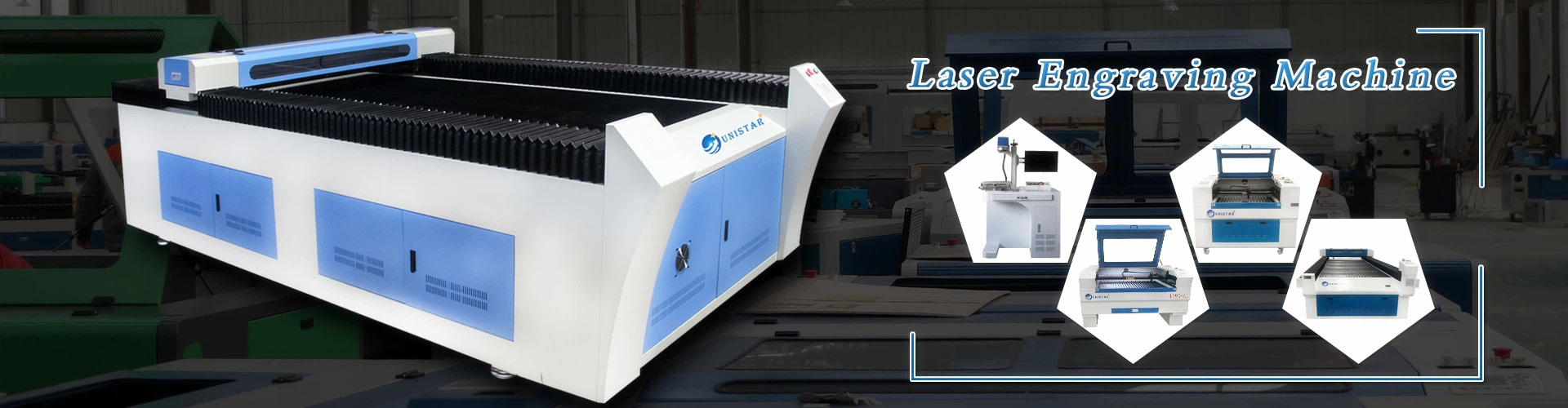
In the field of modern industrial production and product identification, laser marking machines play a crucial role. With advantages such as high precision, high efficiency, and permanent marking, they have replaced many traditional marking methods. However, there are a wide variety of laser marking machines on the market, and different types of laser marking machines have significant differences in many aspects. Understanding these differences helps enterprises and users accurately select the most suitable laser marking equipment according to their own needs.
Differences in working principles
Fiber laser marking machine: Based on the fiber laser to generate a high-energy-density laser beam, it is transmitted to the marking head through the optical fiber and focused on the surface of the workpiece. The instantaneous high temperature causes the surface of the material to vaporize or undergo physical and chemical changes, thereby forming a permanent mark. Its working principle is similar to using a magnifying glass to focus sunlight to ignite paper, except that the "sunlight" here is replaced by a high-energy laser beam, and the focusing accuracy is higher.
CO₂ laser marking machine: CO₂ gas is used as a laser medium to form a plasma in the discharge tube to generate laser. The laser is focused on the surface of the workpiece through an optical lens group, so that the temperature of the material rises after absorbing the laser energy, and thermal decomposition, gasification and other reactions occur to achieve marking. Unlike the fiber laser marking machine, it mainly relies on thermal effects for processing, and the thermal effect on the material is relatively large.
Ultraviolet laser marking machine: It uses ultraviolet lasers to output ultraviolet light with a shorter wavelength. Its working principle is based on photochemical action. When ultraviolet light is irradiated on the surface of the material, the photon energy directly breaks the chemical bonds of the material molecules, causing the material to undergo photochemical reactions and form a mark. This cold processing method causes minimal thermal damage to the material.
Different applicable materials
Fiber laser marking machine: It has good processing performance for metal materials, such as stainless steel, iron, copper, aluminum, etc. Whether it is common industrial metals or some rare metal alloys, it can easily achieve clear and accurate marking. At the same time, it is also used on some non-metallic materials such as ceramics and plastics (some plastic materials). For example, in the production of automotive parts, fiber laser marking machines are often used to mark part numbers, production dates and other information on metal parts.
CO2 laser marking machine: It is mainly suitable for non-metallic materials, such as wood, leather, cloth, paper, acrylic, rubber, etc. In the advertising production industry, CO2 laser marking machines are often used to engrave exquisite patterns and texts on acrylic sheets; in the clothing industry, brand logos can be marked on leather clothing. For metal materials, due to their poor absorption of CO2 lasers, they are generally not suitable for CO2 laser marking machines.
Ultraviolet laser marking machine: Due to its cold processing characteristics, it is suitable for heat-sensitive materials, such as electronic components (chips, integrated circuit boards), medical devices, food and drug packaging (plastic, glass materials), etc. In chip manufacturing, ultraviolet laser marking machines can perform high-precision marking on the surface of tiny chips without affecting the performance of the chip.
Difference in marking effects
Fiber laser marking machine: It can achieve high-contrast, clear and sharp marking effects, and the line width can reach tens of microns. The marking depth is relatively deep, which has advantages for marks that need to be preserved for a long time and have high wear resistance requirements, such as product serial numbers, anti-counterfeiting codes, etc. The marking surface roughness is relatively large, and it may not be suitable for some fine marking scenarios with extremely high surface quality requirements.
CO₂ laser marking machine: The marking effect is delicate, and it can show unique texture and texture effects for materials such as wood and leather. However, due to the large thermal influence, when marking fine patterns or tiny text, there may be slight carbonization or heat diffusion at the edges, affecting the accuracy and clarity of the marking, especially in the field of microelectronics with extremely high precision requirements.
UV laser marking machine: It has ultra-high marking accuracy and can achieve sub-micron-level marking with fine lines and neat edges. It performs well in marking tiny patterns and texts, and has almost no thermal damage to the surface of the material. It can maintain the original surface quality and performance of the material, and is particularly suitable for the marking needs of high-precision products. However, its marking depth is relatively shallow, which is not suitable for some application scenarios that require deep marking.
Comparison of equipment cost and maintenance
Fiber laser marking machine: The equipment cost is relatively moderate, and its fiber laser has a long service life, generally up to tens of thousands of hours, and the maintenance cost is low. Daily maintenance mainly includes regular cleaning of optical lenses and checking whether the fiber connection is loose. Due to its wide application in the industrial field, the market has abundant related accessories and technical support, and the maintenance convenience is high.
CO₂ laser marking machine: The equipment cost is relatively low, but the CO₂ laser life is relatively short, generally ranging from a few thousand hours to about ten thousand hours. The laser needs to be replaced regularly, and gas consumption is also a cost. In addition, the optical lens group is easily contaminated by dust and requires frequent cleaning and maintenance, and the overall maintenance cost is relatively high. In terms of maintenance expertise, the requirements for technicians are high because it involves the maintenance and adjustment of the gas system.
Ultraviolet laser marking machine: The equipment cost is high, mainly due to the complex technology and high manufacturing cost of ultraviolet lasers. However, its service life is long and the maintenance cost is relatively low. The main maintenance work is concentrated on the cleaning and maintenance of the optical system. However, since its application areas are mostly high-precision industries, the equipment stability and precision requirements are extremely high. Once a failure occurs, the maintenance is difficult and the maintenance cost is also high.
Different types of laser marking machines have obvious differences in working principles, applicable materials, marking effects, equipment costs and maintenance. When choosing a laser marking machine, enterprises and users should comprehensively consider their own processing materials, marking accuracy requirements, production efficiency, cost budget and other factors to make the most appropriate choice. With the continuous development of laser technology, various types of laser marking machines are also continuously improving and innovating, and will better meet the diverse market needs in the future.