Advantages of fiber laser cutting machine over CO2 laser cutting machine
1) Excellent beam quality: smaller focus spot, finer cutting line, higher work efficiency and better processing quality;
2) Extremely high cutting speed: twice that of CO2 laser cutting machine with the same power;
3) Extremely high stability: the service life of key components can reach 100,000 hours;
4) Extremely low maintenance cost: optical fiber transmission, no need for reflective lenses, can save a lot of maintenance costs;
5) Easy operation and maintenance of the product: optical fiber transmission, no need to adjust the optical path;
However, compared with CO2 laser cutting machines, the cutting range of optical fiber is relatively narrow. Due to the wavelength, it can only cut metal materials, and non-metals are not easily absorbed by it, thus affecting its cutting range.
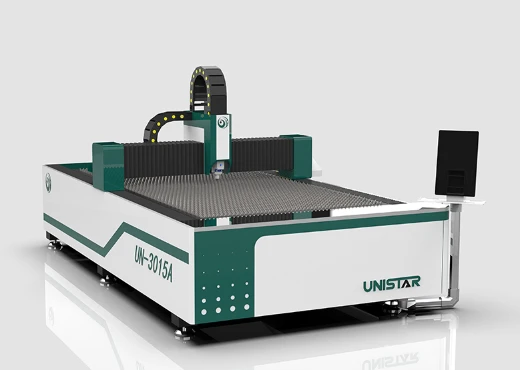
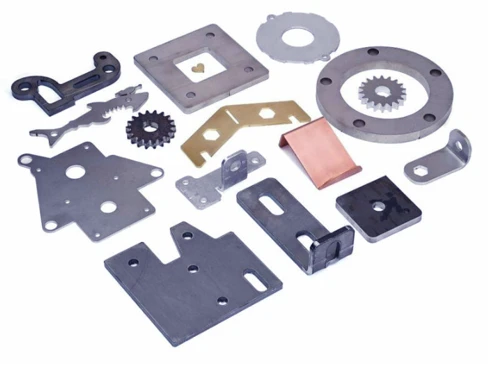
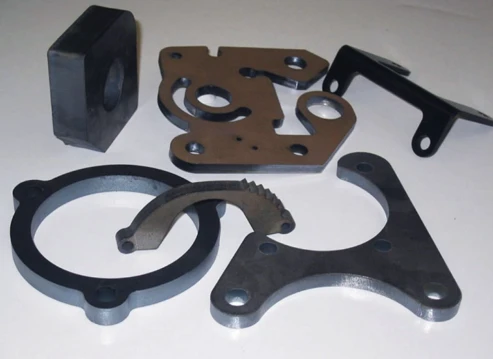
Comparative analysis of the advantages of fiber laser cutting machines:
1. Higher cutting efficiency
Better beam quality: The wavelength of fiber laser (1.06 μm) is shorter than that of CO2 laser (10.6 μm), and the absorption rate of metal materials is higher (especially for highly reflective materials such as copper and aluminum), and the cutting speed can be 2-3 times faster.
The advantage of thin plates is obvious: For example, when cutting 1mm stainless steel, the speed of fiber laser can reach more than 3 times that of CO2.
Fast start and stop: Fiber laser has a faster response speed and is suitable for high-precision and high-speed cutting.
2. Lower energy consumption and operating costs
High electro-optical conversion rate: The electro-optical conversion efficiency of fiber lasers is about 30-35%, while that of CO2 lasers is only 10-15%, reducing energy consumption by more than 50%.
Low maintenance cost: CO2 lasers require regular replacement of gases (such as CO2, nitrogen, and helium mixed gases) and lenses, while fiber lasers have no gas consumption and a simple structure, reducing maintenance costs by more than 70%.
3. Applicable materials are more extensive
Metal cutting advantages: Fiber laser is particularly suitable for cutting highly reflective metals such as copper, aluminum, and stainless steel, while CO2 laser is prone to reflective damage to the equipment when processing these materials.
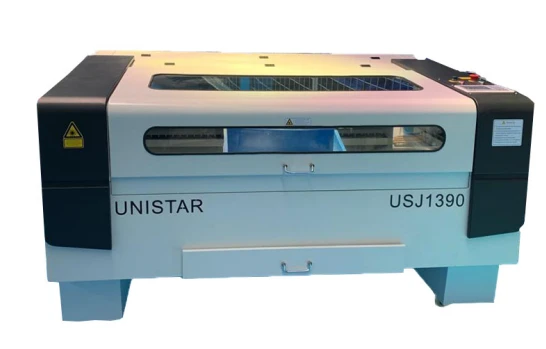
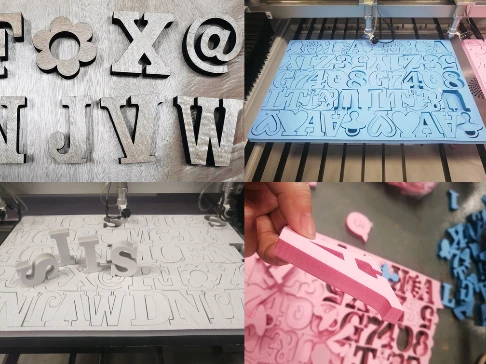
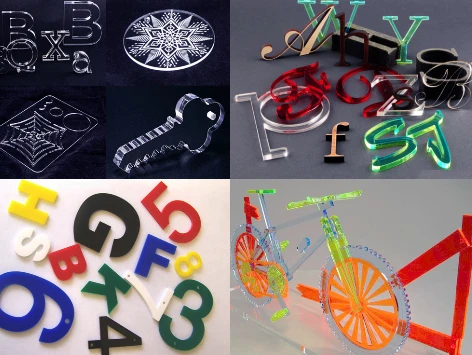
Non-metal limitations: CO2 laser is more effective when cutting non-metals (such as acrylic, wood, and cloth) because the wavelength is more easily absorbed by non-metals.
4. Equipment life and stability
Longer life: The life of fiber laser can reach more than 100,000 hours, and that of CO2 laser is about 20,000-30,000 hours.
Adjustment-free optical path: Fiber laser is transmitted through flexible optical fiber, and does not require the complex lens calibration system of CO2 laser, which has higher stability.
5. Precision and flexibility
Smaller focus spot: The diameter of the fiber laser spot is smaller (up to 0.01mm), which is suitable for fine cutting (such as precision parts, hollow patterns).
Flexible processing: Fiber transmission can cooperate with the robot arm to achieve three-dimensional cutting, while CO2 laser has low flexibility due to lens restrictions.
6. Environmental adaptability
Anti-environmental interference: Fiber lasers are not sensitive to temperature and humidity, while CO2 laser lenses are easily contaminated in humid or dusty environments.
Exceptions
Non-metal requirements: If you need to frequently cut acrylic, wood, etc., you still need CO2 equipment.