Laser Welder vs MMA Welder vs MIG Welder vs TIG Welder
MMA Welder (Manual Metal Arc Welder), also known as MMAW or SMAW (Shielded Metal Arc Welder), features with excessive weld spatter, low filler metal utilization, and the need to frequently remove slag and replace rods, resulting in extremely slow speed and low production efficiency. In addition, the higher reliance on rods requires welders with operating skills and experience.
MIG Welder (Metal Inert Gas Welder) features with high wire consumption and heat input, making thin metal sheets easy to deform and burn through, medium-thick metal plates require grooves, resulting in rough welds that require subsequent polishing.
TIG Welder (Tungsten Inert Gas Welder) features with shallow penetration depth and large melting width, which makes it only able to weld thin sheet metals, and results in large deformation. Moreover, high current will cause the tungsten electrode to melt and evaporate, and manual wire filling is difficult and inefficient.
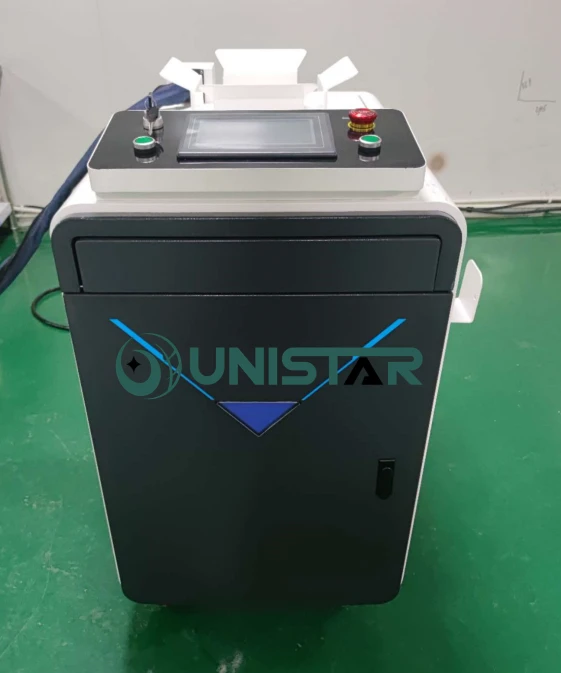
Handheld Laser Welder features with environmentally friendly and pollution-free, deep penetration, high speed, smooth and clean welds with small deformation, which reduces the follow-up grinding process, resulting in straight and uniform welds without professionals.
MMA, TIG, and MIG welding machines require experienced welders, and starters with extensive training and research, while a handheld laser welder is intuitive, concise, user friendly, easy to use, which is preset with mostly used parameters, and you can customize the setting and save what you need, a beginner can easily get started after a few hours of learning.
The speed of MMA, TIG, and MIG welders typically does not exceed 1 centimeter per second, while the speed of handheld laser welders can reach 2-10 centimeters per second, and its efficiency is 2-10 times that of traditional manual arc welders. In addition, the handheld laser welder can easily weld various types of metals, including ordinary steel (such as carbon steel, stainless steel, galvanized steel), aluminum alloy, and brass, and the weld penetration depth (WPD) can reach 8mm for steel, and 6mm for aluminum alloy or brass.
Which One Is Better? - Pros And Cons Comparison
| Comparison Items | Arc Welder | Laser Welder |
|---|---|---|
| Heat Input | High | Low |
| Work Piece Deformation | Big | Small |
| Bonding Strength | Low | High |
| Subsequent Processing | Polish | No Polish |
| Welding Speed | Slow | 2-10 Times Higher |
| Consumptive Material | More | Less |
| Operation Difficulty | Complicated | Easy To Use |
| Human Safety | Unsafe | Safe |
| Environmental Protection | Polluted | Environmentally Friendly |
| Welding Defects | Good | Good |
| Light Spot Width | Not Adjustable | Adjustable |
| Welded Quality | Inferior | Good |