

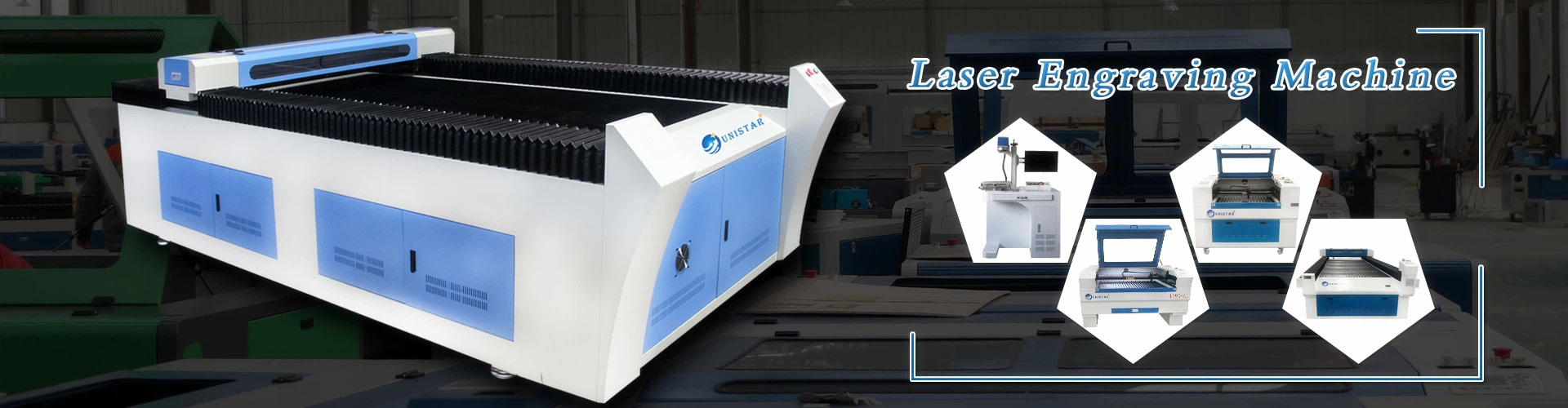
1. Main Types of Laser Marking Machines and Their Applicable Materials
| Laser Type | Wavelength | Applicable Materials | Typical Applications |
|---|---|---|---|
| Fiber Laser Marking Machine | 1064nm | Metals (stainless steel, aluminum, copper), hard plastics, plated materials | Hardware tools, electronic components, automotive parts |
| CO₂ Laser Marking Machine | 10.6μm | Non-metals (wood, acrylic, glass, leather, paper) | Packaging boxes, wooden products, acrylic signs |
| UV Laser Marking Machine | 355nm | Highly reflective metals (gold, silver), brittle materials (glass, ceramics), sensitive plastics | Mobile phone glass, PCB boards, precision electronics |
2. Material-Specific Selection Guide
(1) Metals
Recommended Laser Type: Fiber laser (cost-effective) / UV laser (high-precision needs)
Marking Effects:
Stainless steel, titanium alloys: Laser annealing (black/colored marks, no indentation).
Aluminum, copper: Require high-frequency pulsed fiber lasers or UV lasers (to avoid reflection issues).
Plated/oxidized metals: Fiber lasers directly ablate the surface layer.
(2) Plastics
Recommended Laser Type: CO₂ laser (general-purpose) / UV laser (high-precision or sensitive plastics)
Marking Effects:
Dark plastics (ABS, PC): Laser carbonization (black marks).
Light-colored plastics (PVC, PE): Laser foaming (raised light-colored marks).
Transparent plastics (acrylic): CO₂ laser frosting engraving.
(3) Wood, Leather, Paper
Recommended Laser Type: CO₂ laser (best choice)
Marking Effects:
Wood: Carbonization engraving (dark brown).
Leather: Shallow ablation (no penetration).
Paper/cardboard: Precise cutting or light marking.
(4) Glass, Ceramics
Recommended Laser Type: UV laser (prevents cracking) / CO₂ laser (deep engraving)
Marking Effects:
Glass: UV laser micro-cracking (frosted effect), CO₂ laser fusion engraving.
Ceramics: UV laser surface ablation (high precision).
(5) Highly Reflective Materials (Gold, Silver, Copper)
Recommended Laser Type: Green laser / UV laser
Key Point: Standard fiber lasers are easily reflected; short-wavelength lasers (e.g., green 532nm) improve absorption.
3. Additional Selection Factors
(1) Marking Requirements
Deep engraving: Choose high-power fiber lasers (50W+) or CO₂ lasers.
Fine graphics/text: Choose UV lasers (355nm) for smaller spot size (0.01mm).
Color marking: Requires fiber laser annealing (only for stainless steel and similar metals).
(2) Production Environment
High-volume industrial use: Fiber lasers (durable, low maintenance).
Lab/precision work: UV lasers (cold processing, no thermal damage).
(3) Budget
Economical: Fiber lasers (metals) / CO₂ lasers (non-metals).
High-end: UV lasers (versatile but costly).
4. Common Mistakes and Solutions
| Issue | Cause | Solution |
|---|---|---|
| Faint marks | Laser wavelength mismatched with material | Use fiber for metals, CO₂ for non-metals |
| Material burning | Power too high or speed too slow | Reduce power/increase scanning speed |
| Reflection interference | Highly reflective metals not suited for standard lasers | Switch to green/UV laser or pre-treat surface |
| Glass cracking | Excessive thermal stress | Use UV laser or reduce power |
5. Recommended Equipment Combinations
| Industry | Recommended Machine |
|---|---|
| Metal fabrication | Fiber laser marking machine (20W~50W) |
| Electronics | UV laser marking machine (3W~5W) |
| Packaging/printing | CO₂ laser marking machine (10W~30W) |
Summary
Core principles for selecting a laser marking machine:
Metals → Fiber/UV lasers
Non-metals (plastics, wood) → CO₂ lasers
Highly reflective/brittle materials → UV lasers
Balance speed, precision, and budget