

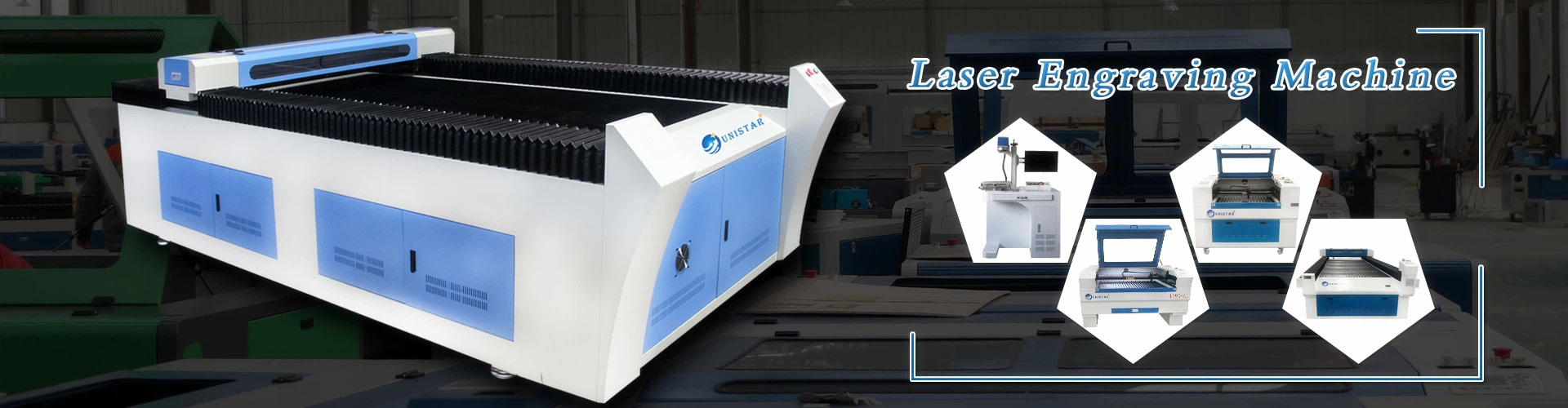
CO₂ Laser Engraving Machines: Versatile Tools for Multiple Application Scenarios
In the field of modern processing and manufacturing, CO₂ laser engraving machines have emerged as indispensable equipment due to their high precision, efficiency, and wide adaptability. Unlike traditional mechanical engraving methods, they use a focused CO₂ laser beam to interact with the surface of materials, enabling non-contact processing that minimizes material damage and ensures consistent results. This unique working principle allows CO₂ laser engraving machines to be widely applied across various industries. Below is a detailed breakdown of their main application scenarios.
1. Advertising and Signage Industry
The advertising and signage industry is one of the earliest and most extensive users of CO₂ laser engraving machines. In this field, the equipment is primarily used for processing a variety of signboards, display props, and promotional materials. For example, it can efficiently engrave patterns, text, and logos on acrylic sheets- a common material in signage production. The laser beam can create clear, smooth edges on acrylic, whether for making luminous signs, storefront nameplates, or exhibition display stands. Additionally, CO₂ laser engraving machines are ideal for processing foam boards, PVC sheets, and wood-based panels used in advertising props. They can quickly carve three-dimensional patterns or hollow-out designs, helping advertisers create unique and eye-catching promotional works. Compared to traditional manual engraving, CO₂ laser technology significantly shortens the production cycle and improves the accuracy of patterns, making it easier to meet the diverse needs of clients.
2. Crafts and Gift Industry
The crafts and gift industry relies heavily on personalized and delicate processing, and CO₂ laser engraving machines perfectly fit this demand. They can process a wide range of craft materials, including wood, bamboo, leather, and paper. For wooden crafts, such as wooden photo frames, decorative plaques, and hand - carved ornaments, the laser can engrave intricate patterns- from simple lines to complex landscapes or character portraits- with high precision. This not only enhances the aesthetic value of the crafts but also allows for customization according to customers' requirements, such as engraving names, dates, or special messages. In the leather craft sector, CO₂ laser engraving machines are used to create patterns on leather products like wallets, keychains, and leather bags. The laser can etch fine textures on the leather surface without damaging the material's structure, resulting in a high - end and unique appearance. Moreover, for paper crafts, such as greeting cards, wedding invitations, and paper cuttings, the laser can achieve precise hollow - out and engraving effects, making the crafts more delicate and artistic. With the growing pursuit of personalized gifts, CO₂ laser engraving machines have become a key tool for small and medium - sized craft workshops and gift customization businesses.
3. Packaging Industry
In the packaging industry, product packaging not only serves the purpose of protecting goods but also plays a crucial role in brand promotion and product differentiation. CO₂ laser engraving machines contribute significantly to improving the quality and attractiveness of packaging. They are widely used for engraving and marking on packaging materials such as cardboard, corrugated paper, plastic films, and aluminum foil. For example, on high - end product packaging boxes (like those for cosmetics, wine, and luxury goods), the laser can engrave brand logos, product information, or decorative patterns. This engraving is not only clear and durable but also adds a sense of luxury to the packaging, helping to enhance the brand image. Additionally, in the food packaging field, CO₂ laser engraving machines can be used for marking production dates, batch numbers, and shelf - life information on packaging materials. Unlike traditional ink printing, laser marking is non - toxic, pollution - free, and does not fade easily, ensuring compliance with food safety standards. Furthermore, the laser can also be used for creating easy - tear lines or perforations on packaging bags, improving the usability of the packaging.
4. Textile and Garment Industry
The textile and garment industry has also embraced CO₂ laser engraving machines for their ability to achieve innovative and personalized designs. These machines are mainly used for fabric engraving, pattern cutting, and garment decoration. For fabrics like cotton, linen, polyester, and denim, the laser can engrave patterns such as floral designs, geometric shapes, or abstract artworks. This process does not require the use of dyes or chemicals, making it environmentally friendly and reducing the risk of fabric discoloration or damage. In denim processing, for instance, CO₂ laser engraving machines are used to create the popular "distressed" effect on jeans. Compared to traditional sandblasting or manual scraping methods, laser engraving is more precise, efficient, and consistent, and it does not produce harmful dust or waste, meeting the environmental requirements of the modern textile industry. Additionally, the machines can be used for cutting fabric patterns, especially for complex and small - sized patterns that are difficult to achieve with traditional cutting tools. This helps garment designers realize more creative designs and improve the production efficiency of clothing.
5. Electronics Industry
In the electronics industry, where precision and miniaturization are critical, CO₂ laser engraving machines are used for marking and processing various electronic components and products. They can engrave clear and precise marks on materials such as plastic casings of electronic devices (like mobile phones, computers, and home appliances), circuit boards, and sensors. These marks typically include product models, serial numbers, barcodes, and QR codes, which are essential for product traceability, quality control, and after - sales service. The high precision of CO₂ laser engraving ensures that the marks are legible even on small - sized electronic components, and the marks have good wear resistance and chemical stability, which can withstand the harsh environments of electronic product use and transportation. Moreover, CO₂ laser engraving machines can also be used for cutting and drilling thin plastic films and flexible circuit boards, which are important components in modern electronic products. The non - contact processing method avoids mechanical stress on the components, ensuring their performance and reliability.
6. Educational and Research Fields
Beyond industrial applications, CO₂ laser engraving machines also play an important role in educational and research fields. In schools and universities, especially in engineering, design, and art departments, these machines are used as teaching tools to help students understand the principles of laser processing and develop practical skills. Students can use CO₂ laser engraving machines to create prototypes of their designs, such as mechanical parts, architectural models, or artworks, which enhances their hands - on ability and creativity. In research institutions, CO₂ laser engraving machines are used for conducting experiments and developing new materials and processing technologies. For example, researchers may use the machines to study the interaction between laser beams and new types of composite materials, or to develop more efficient and precise engraving processes for specific applications.
Precautions for Using CO₂ Laser Engraving Machines
While CO₂ laser engraving machines are highly versatile, there are several precautions to ensure safe and effective operation. First, operators must receive professional training to familiarize themselves with the machine's structure, working principle, and operating procedures. They should wear appropriate protective equipment, such as laser safety glasses, to prevent eye damage from the laser beam. Second, the working environment should be well - ventilated to remove the smoke and fumes generated during the engraving process, which may contain harmful substances. Additionally, it is important to select the appropriate engraving parameters (such as laser power, engraving speed, and focal length) based on the type and thickness of the material to avoid material damage or poor engraving quality. Finally, regular maintenance of the machine, including cleaning the laser head, checking the optical components, and lubricating the moving parts, is essential to ensure its long - term stable operation.
In conclusion, CO₂ laser engraving machines have become a vital part of many industries due to their wide application range, high precision, and efficiency. As technology continues to advance, these machines are expected to become even more versatile, opening up new application scenarios and contributing to the development of various industries.